Yellow sticky traps can help show whether adult Asian citrus psyllids are being caught near a trap and whether catches change over time. They are a monitoring aid, not a census of psyllids in a grove: they do not reveal how many eggs or nymphs are on new growth, whether a captured insect carries the bacterium associated with citrus greening, or whether a treatment is warranted.
What a trap tells you
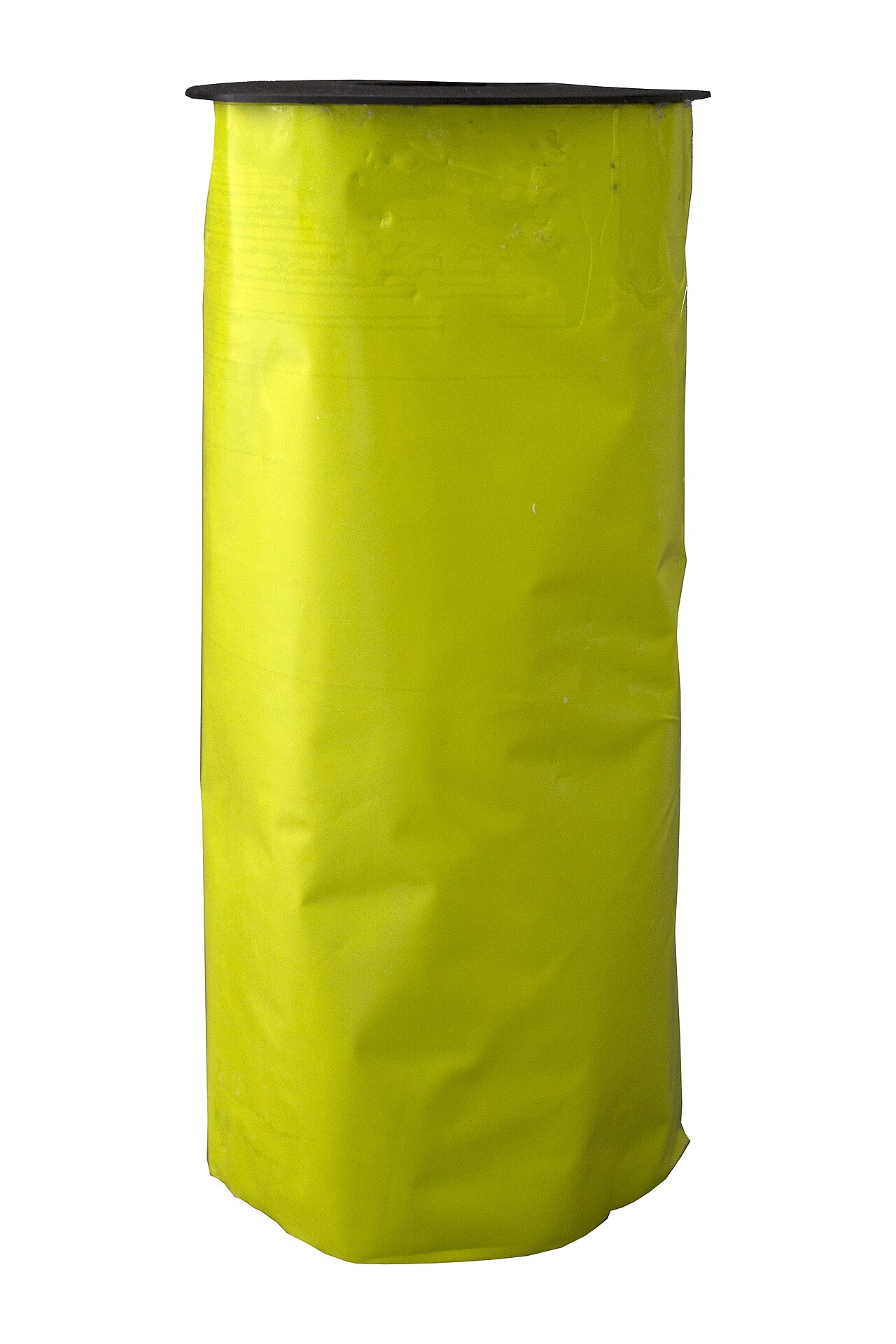
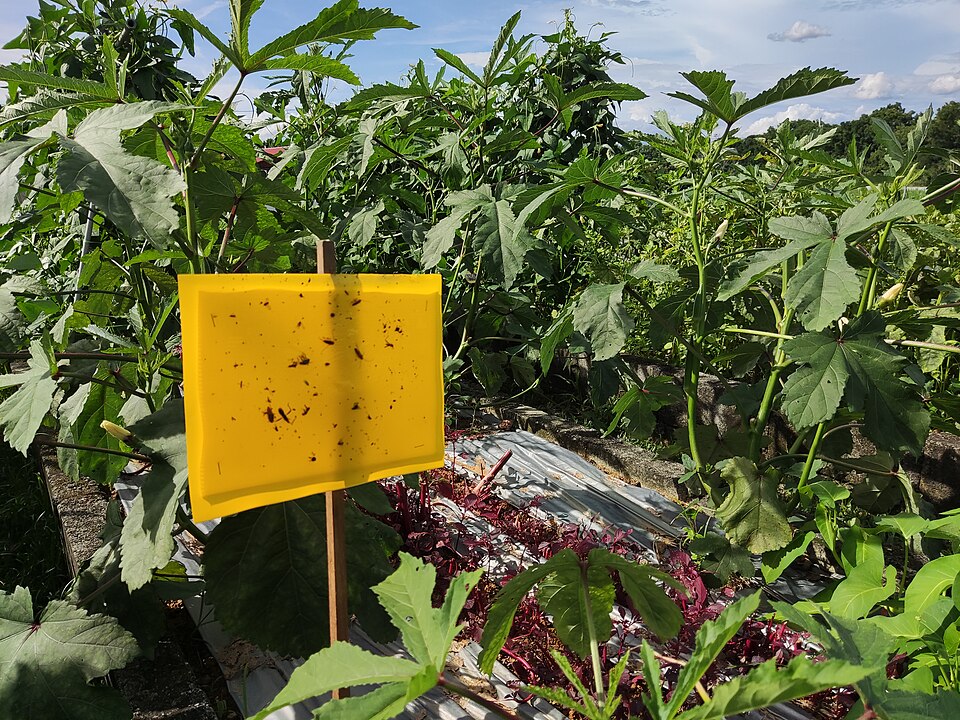
A yellow panel trap catches insects on a sticky surface. In California Department of Food and Agriculture (CDFA) detection guidance, the trap’s colour is the attractant for Asian citrus psyllid (ACP). The guidance describes a state detection protocol, however, and says trapping procedures may change; it is not a universal grower monitoring schedule. CDFA trapping guide
If an ACP is correctly identified on a trap, that is evidence an adult was present in the area during the period the trap was deployed. Repeated observations can help track changes in catches, provided traps are checked consistently. Keep records of where and when each trap was set and collected, and compare like with like—for example, traps used in similar positions for similar periods.
A catch is not a direct measure of the total number of psyllids in the trees. It reflects insects caught at that particular trap, over its deployment period. A zero catch means none were found on that trap when it was checked; it does not prove ACP is absent from the block.
What traps do not show
Yellow sticky traps primarily monitor flying adults. They do not show whether eggs or nymphs are present on tender growth. ACP lays eggs on young flush, and the nymphs develop there, so inspecting new shoots provides information a trap cannot. The University of Arizona Cooperative Extension’s October 2025 commercial-citrus guide describes visual inspection of flush for immature stages and tap sampling for adults. University of Arizona Cooperative Extension, Guidelines for Asian Citrus Psyllid and Citrus Greening Disease Management in Commercial Citrus Production
A sticky-trap catch also cannot diagnose Huanglongbing (HLB), or citrus greening. Finding an ACP does not establish that it carries the disease-associated bacterium; a trap is not a test of the insect or the tree. If you suspect ACP or HLB, use the relevant local extension or plant-health authority’s identification and reporting guidance.
Nor does a catch by itself establish an action threshold. The sources cited here do not provide a universal trap-count threshold for deciding when to treat. Interpret catches alongside flush inspections, local conditions and current regional guidance rather than treating a single count as a stand-alone trigger.
How to make catches more useful
Use a consistent placement and schedule. CDFA’s California detection guidance places yellow panel traps in the upper half of the tree canopy, toward outer branches, with open space around the trap and exposure to sunlight. It specifies monthly replacement for that program, while noting that protocols are subject to change. Check current local instructions before adopting those details for a commercial monitoring programme. CDFA trapping guide
Record deployment and inspection details. Note the trap location, dates deployed and collected, and the number of ACP identified. Record whether traps were dirty, damaged or otherwise difficult to read. These notes help distinguish a change in catches from a change in how or how long traps were used.
Pair traps with inspection of new growth. Look for eggs, nymphs and signs of their presence on tender flush. The University of Arizona guide describes checking citrus trees regularly and using both visual inspection and adult sampling. Its specific sampling recommendations apply to its Arizona guidance; growers elsewhere should consult local advice. University of Arizona Cooperative Extension
Confirm identification. Sticky cards can catch other insects, and a suspected psyllid may need expert identification. Follow local reporting procedures if you find a suspected ACP in an area where it is not known to be established; do not move plant material or insects contrary to local rules.
Bottom line
Yellow sticky traps are useful for detecting and following adult ACP catches near the traps. They are not a measure of the whole grove population, a substitute for inspecting flush, a test for HLB, or a treatment decision on their own. Use them as one part of a locally appropriate monitoring plan, and interpret results in the context of consistent records and current extension or regulatory guidance.
Further reading
- Guidelines for Asian Citrus Psyllid and Citrus Greening Disease Management in Commercial Citrus Production | UA Cooperative Extension
- Asian Citrus Psyllid (ACP) Trapping
- Monitoring methods for Asian citrus psyllid
Researched and written with AI assistance; references are listed for verification.
Browse suppliers for yellow sticky traps on Made-in-China.com
Explore pest control