In soilless greenhouse tomatoes, compare what the irrigation system delivers with what drains from the root zone, and read both alongside substrate-moisture trends. These measurements help growers spot changes in water use or delivery; they do not provide a universal irrigation target. The appropriate interpretation depends on the crop, substrate and growing conditions.
Measure input and drainage over the same period
At representative locations, collect water from a dripper and capture drainage from the associated growing area. Record both volumes over the same irrigation period, using the same units. Monitoring can be done manually or with automated stations; the key is to use consistent locations and collection periods so readings can be compared over time. WayBeyond’s guide to drip and drain monitoring describes this approach.
Calculate the drainage fraction as:
Drainage fraction (%) = drainage volume ÷ irrigation input volume × 100
For example, divide the collected drainage volume by the delivered irrigation volume for the same period, then multiply by 100. This is a measurement, not a target: an appropriate value depends on the crop and growing conditions, including the substrate and environment. Do not treat drainage as water lost through evaporation; it is water collected leaving the growing medium.
Compare readings across representative locations as well as over time. Differences between locations, or a change in the input-to-drain relationship, are prompts to check the system and crop conditions—not proof of a particular cause.
Track moisture in the root zone
A substrate-moisture sensor can add information about conditions between irrigation events. Depending on the instrument, it may report water content or moisture tension. Use readings from the same sensor and location to follow trends; do not assume that values from different sensor types or growing media are directly comparable.
Position measurements to reflect the root zone, and interpret them with the timing of irrigation and drainage records. A moisture reading alone does not show how uniformly water is being delivered across the greenhouse. Greenhouse tomato production relies on precise water and nutrient application, particularly in soilless media, according to Netafim’s greenhouse tomato overview.
Pair drainage readings with EC and pH
Measure the electrical conductivity (EC) and pH of the irrigation solution and collected drainage, recording where and when each sample was taken. EC can help track changes in the solutions entering and leaving the root zone. A change in drain EC may be a reason to review irrigation and nutrient-management records, but it is not by itself a diagnosis or an instruction to increase irrigation. Interpret it in context, including the incoming solution and recent growing conditions.
Record feed and drain pH in the same way. Consistent sampling makes it easier to notice changes; the readings should be interpreted using crop- and system-specific guidance rather than a generic setpoint.
Check that the system is delivering evenly
If measurements vary noticeably among locations, check that the collection points are representative and inspect irrigation delivery. Drippers can clog, and uneven delivery may not be obvious from a single measurement. Comparing collected input volumes across locations can help identify where a closer system check is needed.
A practical record for each sampling period can include:
- Greenhouse zone and sampling location
- Irrigation volume and collection period
- Drainage volume and calculated drainage fraction
- Feed and drain EC and pH
- Root-zone moisture reading, sensor type and location
- Relevant crop or environmental changes
Use repeated, comparable measurements to guide review of the irrigation schedule. Avoid applying a fixed drainage percentage or moisture threshold across different crops, substrates or conditions: the available monitoring guidance notes that drainage targets vary with crop, substrate and environment.
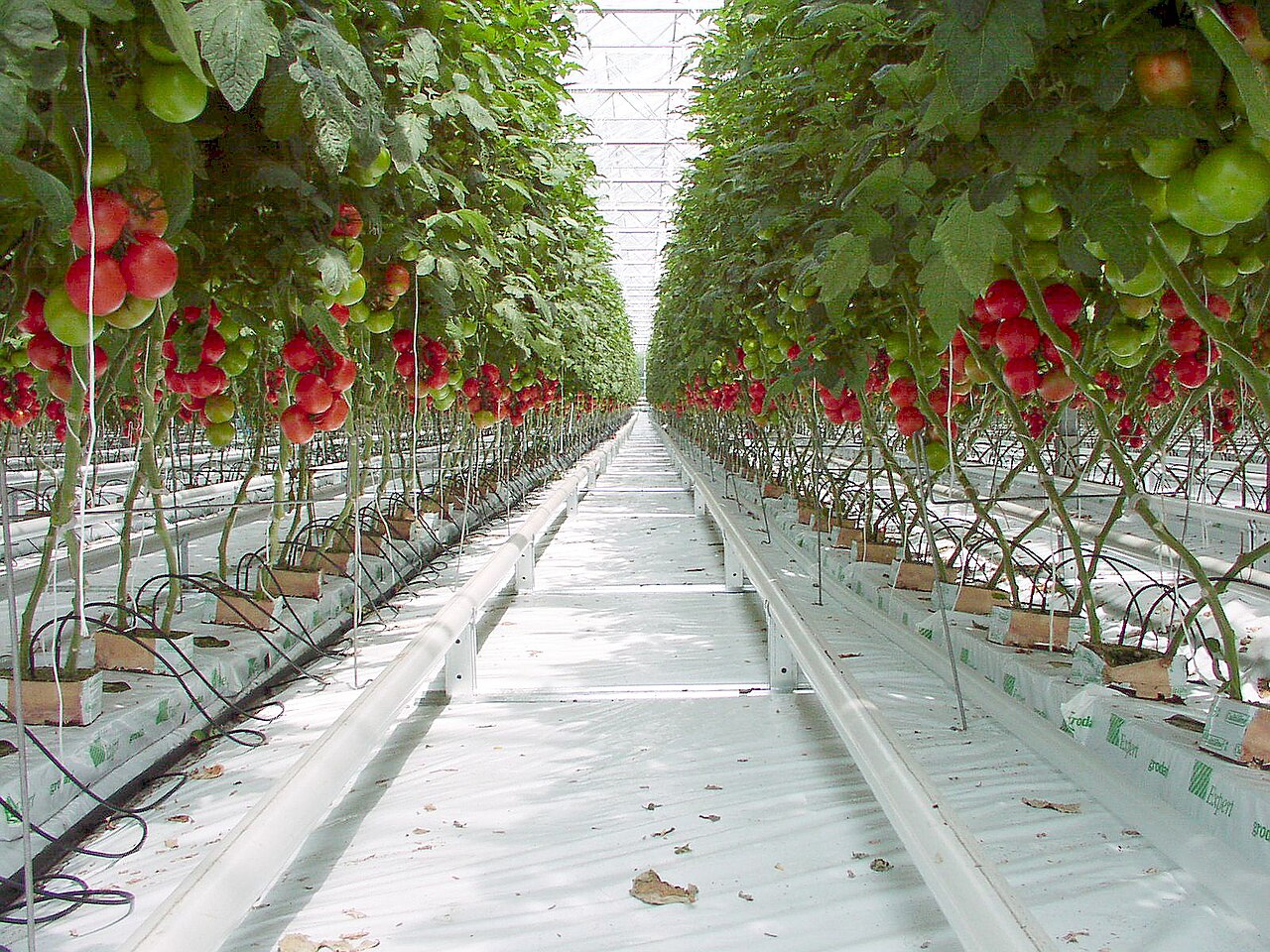
The photograph illustrates tomatoes grown on rockwool; it is not a demonstration of the sampling or monitoring procedure.
Further reading
- The grower’s guide to drip and drain monitoring
- Tomato Irrigation Systems
- Greenhouse Tomatoes - Precision Irrigation for Tomatoes
Researched and written with AI assistance; references are listed for verification.