Guizhou’s agriculture department has issued a province-wide plan to improve matcha quality, published in full by Food Machinery Equipment Network on 13 November. Dated 28 October, the notice sets out work on growing practices, production records and oversight under the province’s 2026–2028 matcha programme.
The plan calls for records at growing and processing sites as well as stronger local supervision. It covers tencha, the leaf material used to make matcha, and addresses water treatment in the tencha workshop. It also sets a 2028 target for growing area aligned with organic or European market requirements. That is a provincial objective. Any organic claim on a particular powder still needs to be supported for the supplied lot and its processing chain.
Qualify the powder in the intended drink
A café chain and a bottled-drink manufacturer can use the same powder very differently. Evaluate samples at the intended dose in the actual beverage base and check colour and sediment after the relevant holding period. For a bottled line, keep the temperature and mixing process consistent across suppliers so the results can be compared.
Ask the supplier for the growing area’s identity, the tencha processor, the powder’s lot code and recent test evidence for the target market. Where a formulation depends on a repeatable colour, agree on the reference sample and measurement conditions before it becomes a purchase specification. Request a production lot as a follow-up to the development sample.
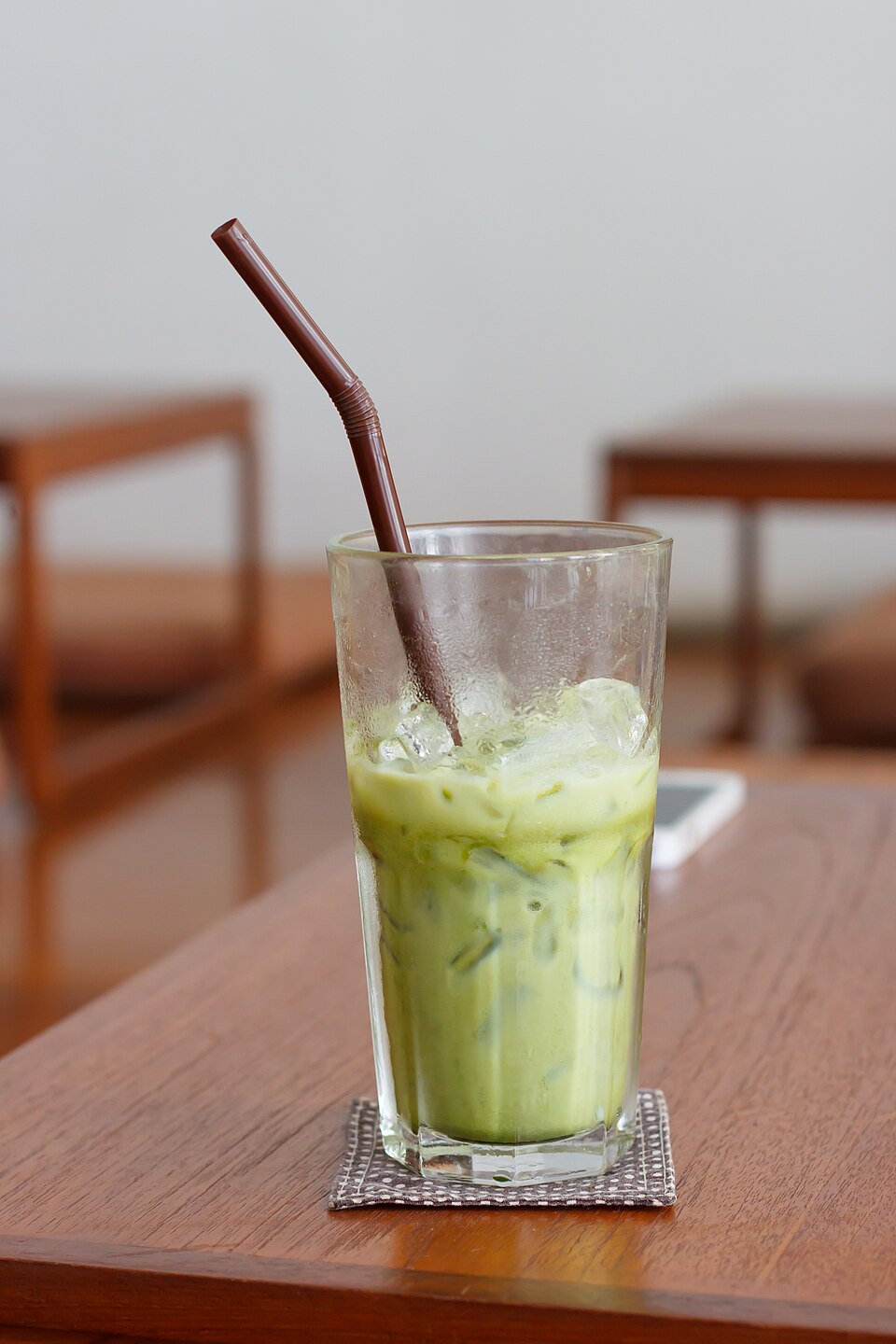
An iced green tea latte illustrates one beverage use for matcha powder.
Further reading
Researched and written with AI assistance; references are listed for verification.
Browse suppliers for matcha powder for beverage formulation on Made-in-China.com
Explore beverages