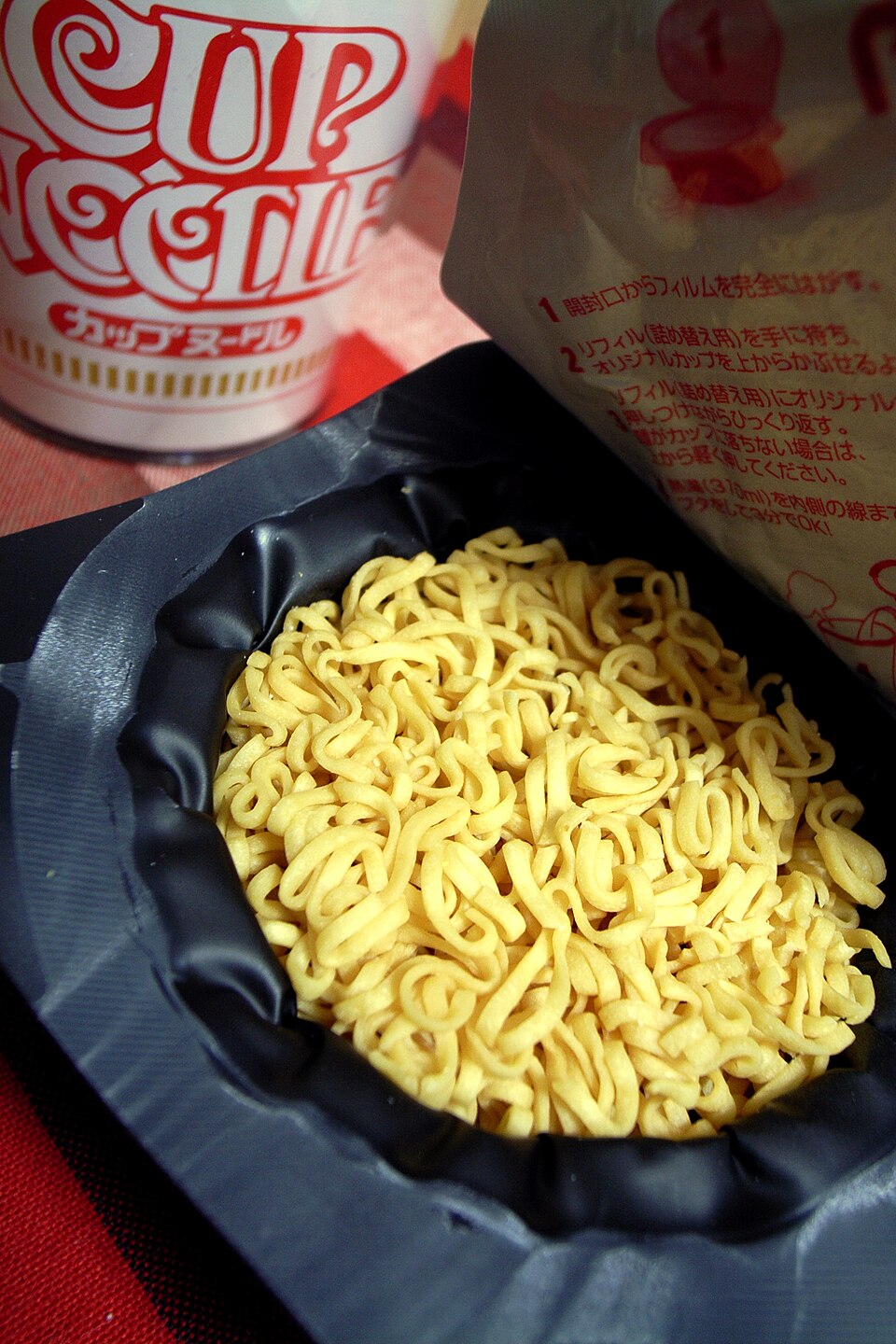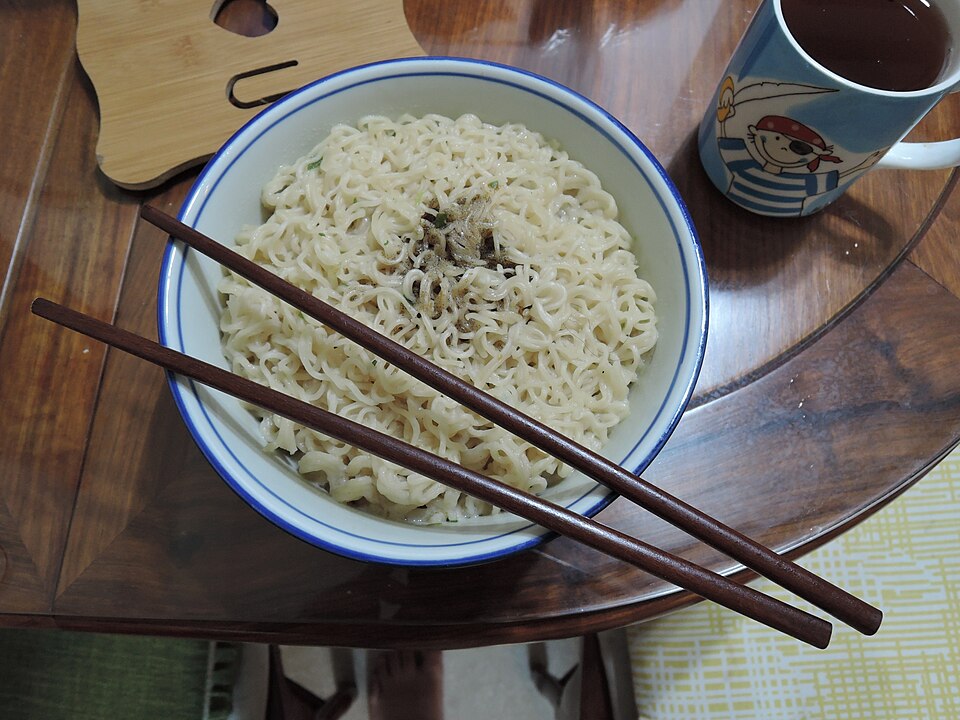
To assess whether powdered seasoning disperses evenly, test it under the product’s intended preparation conditions and check more than whether the broth looks uniform. A useful evaluation distinguishes ingredients that dissolve from particles that remain suspended, and checks whether seasoning is retained in the broth or carried into the noodle block.
Define what “evenly dispersed” means
Powdered seasonings are mixtures, so a clear broth is not necessarily a uniformly seasoned one. Some components may dissolve; others may remain as fine particles or settle. Set criteria for the product’s intended use, such as:
- Similar seasoning intensity across samples taken from different parts of the prepared broth.
- No unexpected clumps or concentrated deposits.
- Acceptable sediment or settling over the intended eating period.
- Consistent distribution between the broth and noodles, if the product is designed to season both.
Nikken Foods’ guidance for soy sauce powders in instant-noodle systems specifically identifies dissolution under intended preparation conditions and salt contribution as evaluation points. Those are useful checks, but they do not establish that every powder component should fully dissolve. Nikken Foods
Standardise the preparation
Start with the preparation directions intended for the product. Keep the following consistent between tests:
- Noodle and seasoning quantities.
- Water volume and starting temperature.
- Bowl or vessel shape.
- Order and timing of seasoning addition.
- Mixing method and duration.
- Standing time before sampling.
Run an additional test under any preparation variation that matters to the product, such as adding seasoning before rather than after rehydration. Record the procedure so that results can be compared across formulations or batches.
Check dispersion at several points
After preparation, inspect and sample the broth from more than one location—for example, near the surface and from deeper in the vessel. Compare samples for visible clumps, sediment and seasoning intensity. If the product includes a noodle block, also check whether powder appears to remain trapped between the noodles or is carried through the block during rehydration.
A Nissin patent describes a preparation method intended to reduce seasoning dispersion or loss through a noodle block during rehydration. It is a historical technical example, not evidence of current commercial practice or a test result for another product. Nissin Food Products patent
Use measurements to support observation
Visual inspection and tasting can help identify unevenness, but they cannot establish that every component is distributed equally. Where uniformity matters, take samples from defined locations and compare a relevant measurable property:
- Salt contribution: use a suitable, validated method for the product. Conductivity can be a screening measure, but it is not a salt-specific result because other dissolved substances can affect it.
- A target flavour component: where a suitable marker and analytical method are available, compare its concentration across samples.
- Settling: observe or measure samples at preparation and after the product’s expected standing time.
Keep sampling and measurement procedures the same between tests. Repeat the assessment across preparations and, where relevant, seasoning batches. Set acceptance limits from the product’s own requirements; the sources cited here do not provide universal limits.
Interpret results in context
If samples differ, investigate the preparation and formulation together: powder wetting, clumping, mixing, particle size and the presence of components that do not dissolve may all be relevant considerations. Treat these as possible factors to investigate, not as a diagnosis from appearance alone.
The practical question is whether the seasoning performs consistently in the way consumers are instructed to prepare the noodles. Assessing dissolution, salt contribution and distribution through the noodle block separately gives a clearer answer than relying on a single visual check.
Further reading
- How Can Soy Sauce Powders Build Flavor in Noodles and Seasoning ...
- Process of preparing instant noodles - Nissin Food Products Co., Ltd.
Researched and written with AI assistance; references are listed for verification.
Browse suppliers for instant food on Made-in-China.com
Explore convenience food