Meihua said in an 8 October Chinese announcement that it had completed organisational greenhouse-gas verification in September, covering the group and its Tongliao, Xinjiang and Jilin production subsidiaries. It also reported third-party product carbon-footprint verification for six categories made by those subsidiaries.
The categories are monosodium glutamate, threonine, lysine, xanthan gum, valine and isoleucine. The statement cites ISO 14064-1, ISO 14067 and ISO 14064-3 as the standards used for the relevant accounting and verification work.
For feed-additive buyers, the announcement provides a reason to ask for product-level carbon documentation. It does not itself publish a comparable emissions value for every commercial grade or demonstrate a reduction against a previous year.
Match the declaration to the purchase
Request the applicable verification statement, accounting period, production site, functional unit and system boundary. These details determine whether a figure can be used consistently in the buyer’s own supply-chain calculations.
Organisational emissions and a product footprint answer different questions. One should not be substituted for the other simply because both appear in the same supplier presentation.
The commercial specification remains equally important: identify the amino acid, concentration and delivered grade before attaching environmental data to the order. Meihua’s announcement describes an additional layer of supply-chain evidence. A comparison between suppliers still needs compatible methods and clearly identified products, rather than a general claim that one source is automatically lower carbon.
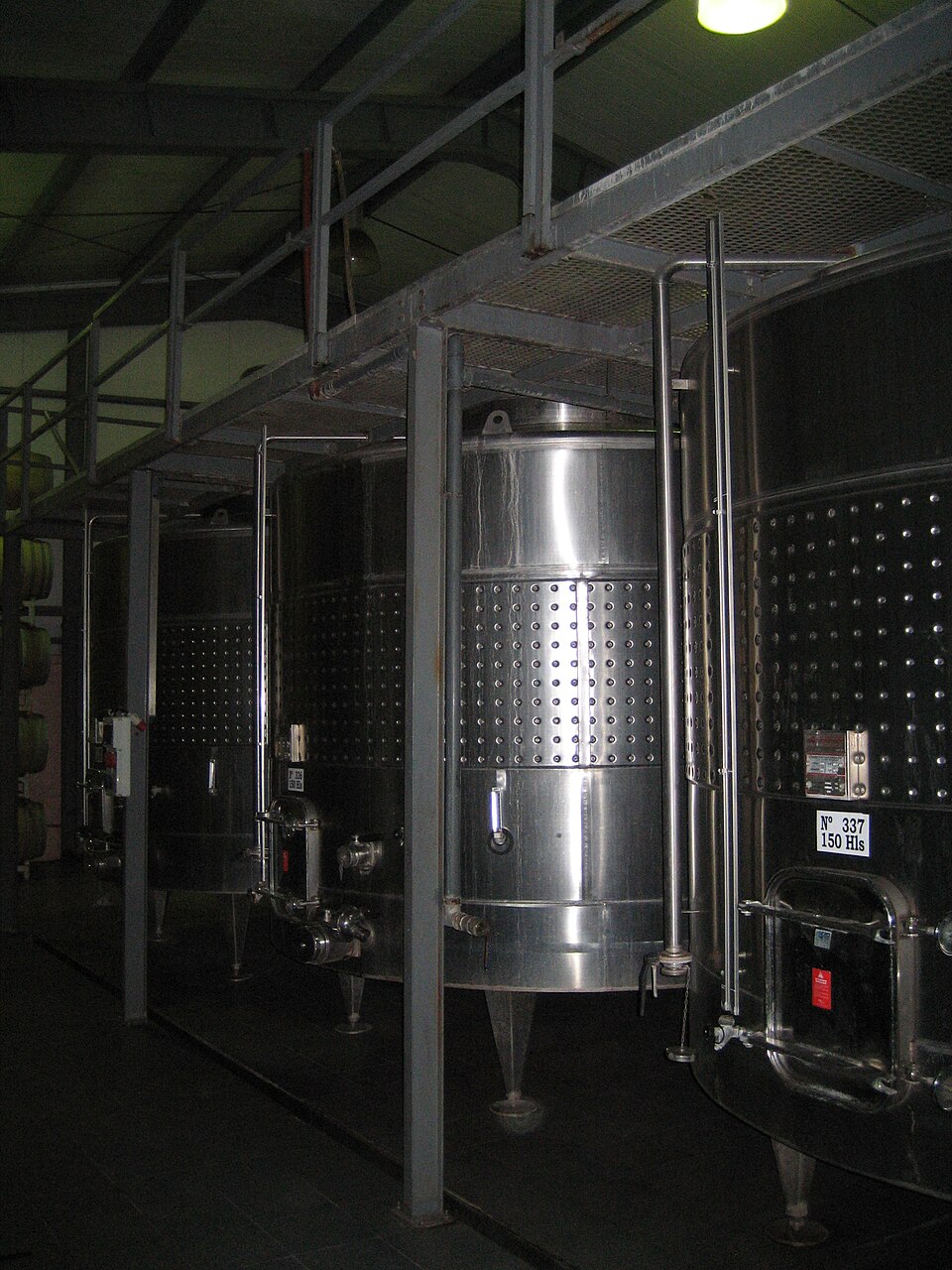
A stainless-steel fermentation tank; a process illustration, not a Meihua facility.
Further reading
Researched and written with AI assistance; references are listed for verification.