Haday announced a salt-reduction initiative on 3 November that extends beyond a single soy-sauce product. The Chinese condiment supplier describes work on product innovation, clearer salt information, kitchen tools and recipe guidance under its branded campaign.
Its announcement says the reduced-salt range is expanding from soy sauce into oyster sauce, soybean paste and speciality sauces. It also describes front-of-pack salt quantities and portion-control utensils intended to help consumers understand how much seasoning they use.
For overseas distributors, the development is relevant to both assortment planning and product communication. Different condiment categories can share a positioning while retaining different ingredients, serving sizes and sensory expectations.
Compare the actual label
The campaign name includes a numerical reference, but that name should not be treated as a universal sodium specification for every product in the range. Buyers need the nutrition panel and serving basis of the exact SKU being quoted.
A comparison can record pack size, ingredient declaration, sodium or salt basis and intended use. Where a reduced-salt claim is proposed for another market, review the local requirements against the actual product rather than copying domestic marketing language.
Flavour assessment also needs a defined application. A table condiment and a cooking sauce may be used in different quantities. Haday’s announcement describes a coordinated consumer initiative; export availability, approved artwork and the composition of each offered product still require a direct commercial confirmation.
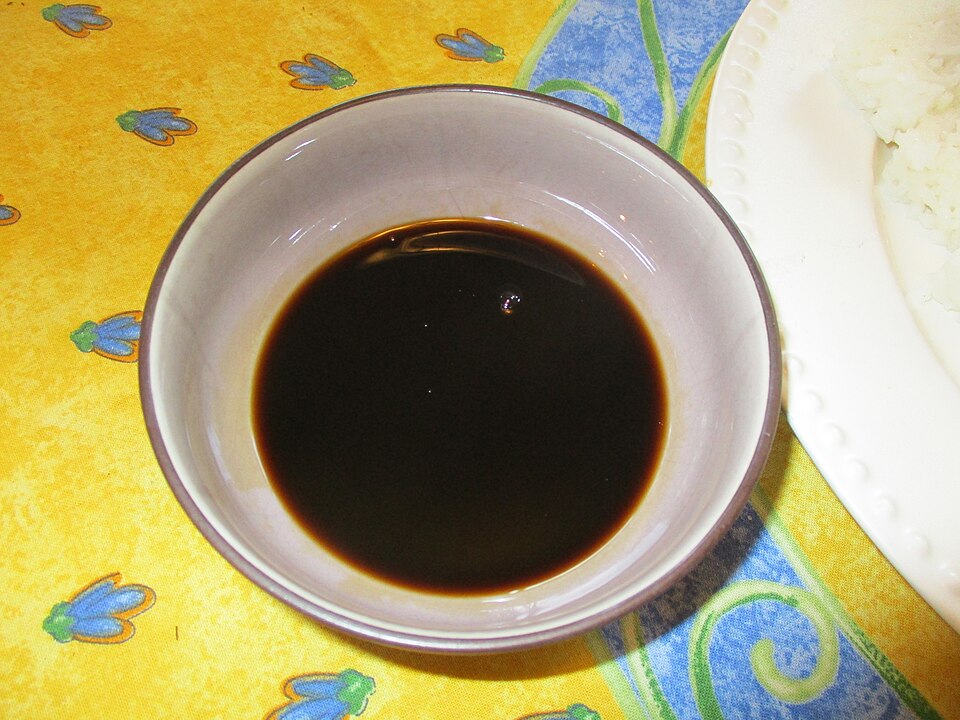
Soy sauce in a bowl; not an identified Haday product or a measured low-salt formulation.
Further reading
Researched and written with AI assistance; references are listed for verification.